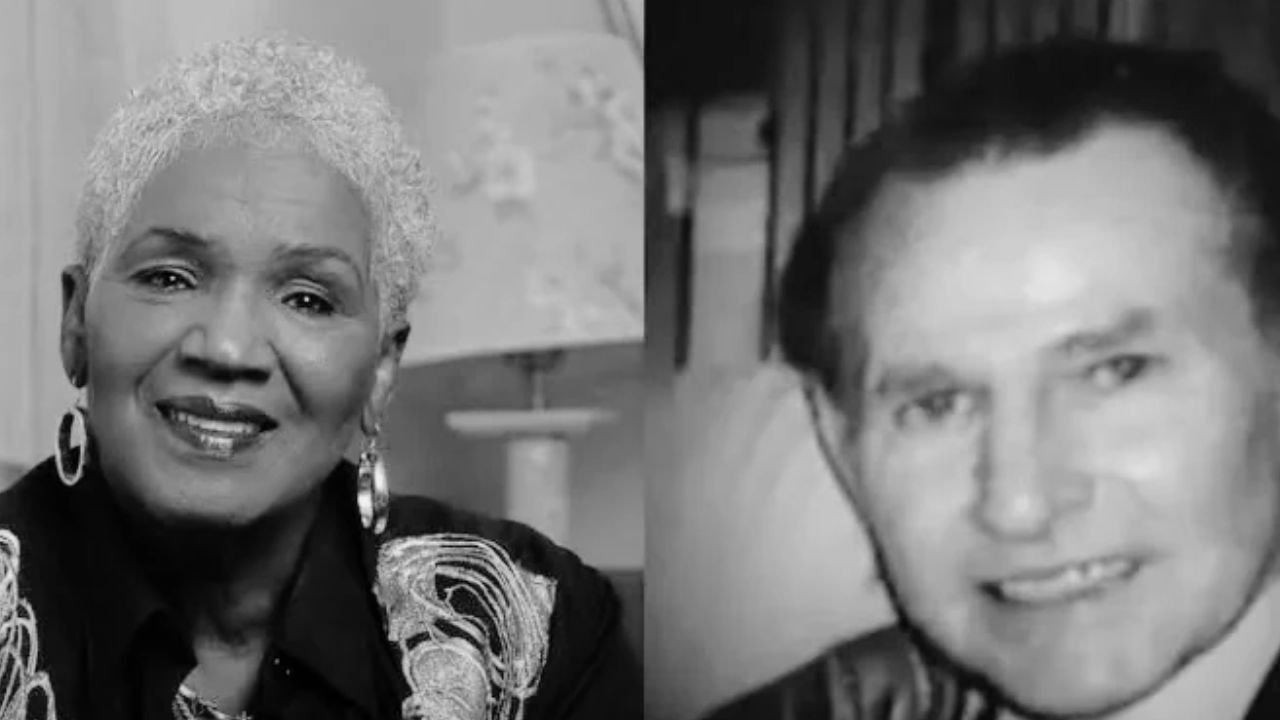
Most people who recognize the DeBarge name think of smooth 1980s R&B, or perhaps El DeBarge’s solo work. Fewer know much about the man at the head of the family tree. Robert Louis DeBarge, Sr. was not a recording artist or a public figure in his own right. He was a private man whose marriage to Etterlene Abney produced ten children — several of whom would go on to shape American R&B music.
This article takes a factual look at who Robert Louis DeBarge, Sr. was, his marriage to Etterlene, their large family, and why his name still comes up in conversations about one of R&B’s most talked-about families.
Who Was Robert Louis DeBarge, Sr.?
Robert Louis DeBarge, Sr. is identified in family records and public summaries as the patriarch of the DeBarge family. He is generally listed as having been born in 1932 and passing away in 2009, though a fully documented obituary or verified birth certificate is not widely available in public sources.
One important point worth clearing up right away: Robert Louis DeBarge, Sr. is not the same person as his son Robert Louis “Bobby” DeBarge, Jr. Bobby DeBarge was a musician associated with the R&B group Switch, and he is sometimes the person people are actually searching for. The father and son share nearly identical names, which creates understandable confusion.
Robert Sr. is described in family accounts as white, with reported French and English ancestry. He is also described as a U.S. military veteran, likely Army, though specific details such as rank, service dates, or branch have not been confirmed through reliable primary sources. Some accounts suggest he was stationed near Detroit when he met Etterlene Abney.
How Robert Met Etterlene and When They Married?
Robert reportedly met Etterlene Abney in Detroit around 1952. According to accounts from The Root and Grand Rapids Magazine, the two met while Robert was living or stationed in the Detroit area.
They married in 1953. At the time, Robert was approximately 21 years old and Etterlene was around 17 or 18. Etterlene was African American, and some sources also note American Indian ancestry on her side.
It’s worth putting the timing in context. An interracial marriage in 1953 was not a simple social matter. Across much of the United States, such relationships faced deep hostility and, in some states, legal barriers. The couple built their family during an era when that kind of social pressure was very real.
Robert and Etterlene remained married for roughly two decades before reportedly divorcing in 1974, based on the 1953 marriage date and the separation year cited in available family summaries.
A Marriage That Was Not Without Difficulty
Some accounts of the DeBarge family story include serious allegations made by Etterlene about the nature of the marriage. In interviews and public accounts attributed to her, Etterlene described a household marked by difficulty and alleged abuse. These claims are sensitive and should be understood as Etterlene’s personal account. Robert reportedly disputed some of these characterizations. Without independent verification, it would be unfair to present either side as the definitive record.
Their Ten Children
Robert and Etterlene had ten children together. Below is the full list, using the names most commonly associated with each sibling in public records and family summaries:
- Etterlene “Bunny” DeBarge
- Robert “Bobby” DeBarge, Jr.
- Thomas “Tommy” DeBarge
- William “Randy” DeBarge
- Mark “Marty” DeBarge
- Eldra “El” DeBarge
- James DeBarge
- Jonathan “Chico” DeBarge
- Carol “Peaches” DeBarge
- Darrell “Young” DeBarge
Not all ten children pursued music professionally, and their levels of public recognition vary widely. The siblings most commonly associated with the music industry include El DeBarge, Bobby DeBarge, Tommy DeBarge, Randy DeBarge, Bunny DeBarge, James DeBarge, and Chico DeBarge.
El DeBarge is likely the best known of the group today, recognized for his falsetto voice and hits like “Who’s Johnny” and “I Like It.” Bobby DeBarge and Tommy DeBarge were part of the R&B group Switch before several of the siblings formed DeBarge as a group in the early 1980s. Chico DeBarge and James DeBarge also pursued solo careers at various points.
The point is simple: from one household came an unusually high concentration of musical talent. That makes Robert and Etterlene’s family significant in the context of American R&B history, even if Robert himself remained a private figure.
Detroit Roots and the Move to Grand Rapids
Robert and Etterlene raised their family in Detroit during the 1950s and 1960s. Detroit was, and still is, closely tied to Black American music history — it was the home of Motown and a city with deep musical roots. Growing up in that environment almost certainly shaped the children who later went on to record music.
In 1972, Etterlene moved the children to Grand Rapids, Michigan. This was two years before Robert and Etterlene officially divorced. The move to Grand Rapids is where the DeBarge siblings’ musical development accelerated. According to Grand Rapids Magazine, it was in that city where the family’s gospel church background and close-knit community played a role in shaping the younger children’s musical abilities.
Grand Rapids would go on to become closely associated with the DeBarge name. It is the city where many of the siblings grew up during their teenage years, and it’s the location most often connected to their early musical activity.
Robert’s Role in the Broader DeBarge Story
Robert Louis DeBarge, Sr. was not a musician. He is not credited on any recordings, and there is no public record suggesting he managed or directed his children’s careers. His role in the DeBarge story is fundamentally that of a parent — specifically, the biological father of a large family that happened to produce multiple professional entertainers.
His significance in searches and biographies tends to come up for two reasons. First, people researching the DeBarge family tree want to understand the family’s background, including Robert’s white heritage and Etterlene’s African American and reported American Indian roots. Second, his name sometimes creates confusion with his son Bobby, and readers need help sorting out who is who.
The public record around Robert Sr. is thin. There is no widely circulated interview with him, no reported public statements, and limited documentation beyond what appears in family summaries and articles about his former wife and their children. That’s not unusual for parents of celebrities who chose to stay out of the spotlight.
For those interested in the broader cultural and musical legacy of the DeBarge family, resources like World Business Voice offer coverage of entertainment figures and the stories behind them.
Etterlene DeBarge and the Family After Robert
After the divorce, Etterlene remained the central figure in the DeBarge children’s lives. She is widely described as the family’s matriarch and the driving emotional and musical force behind her children’s upbringing. She passed away in February 2024 at the age of 88, which prompted renewed coverage of the DeBarge family’s history and musical contributions.
Etterlene’s death marked the end of an era for a family that had been in and out of the public eye since the early 1980s. Tributes from her children and from music journalists underscored how central she was to the story that most people associate with the DeBarge name.
Robert Sr., who reportedly passed in 2009, received comparatively little public attention at the time. His death did not generate significant media coverage, which reflects his private status throughout his life.
Why Robert Louis DeBarge, Sr. Still Matters?
Robert Louis DeBarge, Sr. matters in the way that any parent of a significant family matters: he is part of the origin story. Without him, the DeBarge family as the world knows it simply would not exist in the same form.
His marriage to Etterlene in 1953, during a time of social tension around interracial relationships, produced ten children whose music touched millions of listeners. Some of those children had extraordinary careers. Some faced significant personal hardships. The full story of the DeBarge family is complicated, as most real family stories are.
Robert Sr. was not a celebrity. He was not a musician. But he was a foundational figure in a family whose musical output left a genuine mark on American R&B — and that makes him worth knowing about, at least in the context of understanding where that family came from.
Also read: