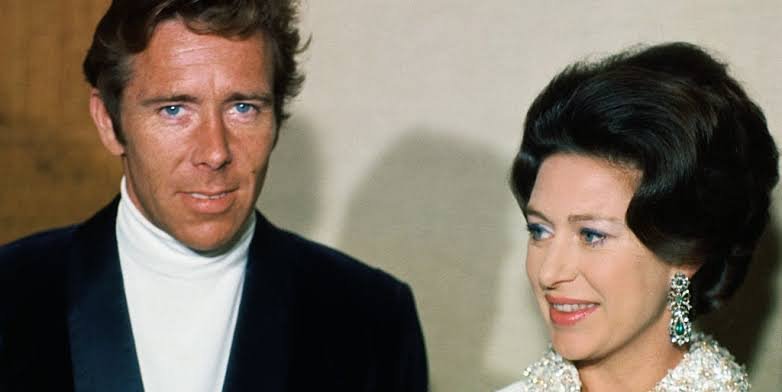
Many people first come across the name Camilla Fry while researching Lord Snowdon, Princess Margaret, or the real people portrayed in Netflix’s The Crown. She sits at an interesting corner of royal history — documented enough to be part of the public record, but not widely known on her own terms.
This article covers who Camilla Fry was, her marriage to Jeremy Fry, her confirmed connection to Antony Armstrong-Jones, and the facts surrounding her daughter Polly Fry’s parentage. It also tries to be clear about what is publicly verified and what belongs to dramatized television storytelling.
Who Camilla Fry Was
Camilla Fry was the wife of Jeremy Fry, a British inventor and businessman connected to the Fry chocolate family. Together, they were part of an artistic and socially prominent circle in Britain during the late 1950s and 1960s.
It is worth being honest here: public records about Camilla’s own career, personal background, and later life are limited. She is primarily documented through her family connections rather than through any independent public role of her own. This article will not fill those gaps with invented details.
What is confirmed is that she was a mother, a wife, and part of a social world that, at a certain point, intersected with one of the most photographed men in Britain at the time — Antony Armstrong-Jones, who would go on to marry Princess Margaret.
Jeremy Fry and Their Social World
To understand Camilla’s story, it helps to understand who Jeremy Fry was. He was an inventor and businessman associated with the Fry confectionery family, known for his entrepreneurial energy and creative thinking.
The Frys were also known for hosting large gatherings. They belonged to a bohemian, artistic social world in Britain — the kind of circle that attracted writers, artists, designers, and photographers. It was a lively and connected world, not particularly bound by convention.
Antony Armstrong-Jones was among the people who moved in this circle. He was a photographer by profession, well known before he became royalty, and the kind of person who fit naturally into that artistic milieu. His friendship with Jeremy Fry is documented and relevant — it explains how Armstrong-Jones and the Frys came to know each other well.
Actor Yolanda Kettle, who played Camilla Fry in The Crown, described this social world in an interview — the parties, Jeremy’s background, and the general atmosphere of the Frys’ lives. It is useful context, though it is worth remembering that The Crown is a drama. Not every scene it depicts should be read as a precise historical account.
Camilla Fry’s Daughter, Polly Fry
Polly Fry was born in 1960. For much of her childhood, Jeremy Fry was understood to be her father. He was her legal and presumed father, and he raised her as his daughter. That role deserves to be stated plainly, not reduced or dismissed.
The question of Polly’s biological parentage became a separate matter — one that did not emerge publicly until much later in her life. Legal parentage and biological parentage are different things, and in Polly’s case, those two things eventually pointed to different men.
Growing up, Polly was simply the daughter of Camilla and Jeremy Fry. The family structure was understood in those terms for decades. It was only later, through a DNA test, that a different picture emerged.
Antony Armstrong-Jones and the Paternity Question
Antony Armstrong-Jones married Princess Margaret in May 1960. He was later given the title Earl of Snowdon. His marriage to Princess Margaret made him one of the best-known figures connected to the British royal family throughout the 1960s and beyond.
Reports indicate that Camilla and Armstrong-Jones had a relationship before his royal wedding. Polly was conceived before the marriage took place — not during the honeymoon, as is sometimes misreported. She was born in the same year as the royal wedding, which is what made the story attract attention when it eventually became public.
In 2004, a DNA test reportedly confirmed that Antony Armstrong-Jones was Polly Fry’s biological father. This is the most concrete piece of evidence in the story. Both Newsweek and Factinate have reported on the 2004 DNA confirmation and the basic timeline surrounding Polly’s birth.
It is important to be precise about what the DNA evidence actually established. Available sources describe the test as confirming Armstrong-Jones’s paternity in relation to Polly. The evidence specifically about Polly’s biological parentage is stronger than some of the broader claims that have circulated about the nature of the relationships involved.
Vulture noted this distinction when covering Armstrong-Jones’s life — that the evidence concerning Polly’s paternity is well-supported, while some wider claims about the relationship dynamics are less firmly established. That is a useful line to hold onto when reading about this story.
Why This Story Attracts Attention
The timing is the core of why this story became notable. Armstrong-Jones married into the British royal family in May 1960. Polly Fry was born that same year. The connection between the man who had just become Princess Margaret’s husband and the child born to his friend’s wife is the detail that kept this story in circulation.
It also raises questions that many readers find genuinely interesting — not just for gossip, but because they touch on how parentage, family, and identity intersect. Polly grew up with one understanding of who her father was. DNA evidence later told a different story. That is a significant experience, regardless of how famous the people involved were.
For readers who first encountered this story through The Crown, it is worth knowing that the series dramatized the Frys and their connection to Armstrong-Jones. The television version is a starting point, not a complete or fully accurate historical record. The real story is somewhat more quietly documented — and in some ways more complex than any dramatized scene can capture.
For broader context on how personal stories intersect with historical records, World Business Voice covers a range of topics that sit at the edge of public life and documented history.
What the Public Record Actually Confirms
To summarize what is reliably supported by available sources:
- Camilla Fry was married to Jeremy Fry, an inventor and businessman associated with the Fry confectionery family.
- The Frys were part of an artistic and socially prominent circle that included Antony Armstrong-Jones.
- Camilla and Armstrong-Jones had a relationship before his marriage to Princess Margaret.
- Polly Fry was born in 1960, the same year as the royal wedding.
- Polly was conceived before Armstrong-Jones married Princess Margaret — not during the honeymoon.
- Jeremy Fry was Polly’s legal and presumed father throughout her upbringing.
- A DNA test in 2004 reportedly confirmed Armstrong-Jones as Polly’s biological father.
What the public record does not reliably confirm includes the specific details of Camilla’s early life, her personal views, her later years, or the finer texture of any relationships beyond what is described above. Those details are either not publicly available or not yet confirmed by reliable sources.
A Quietly Significant Story
Camilla Fry was not a public figure in the conventional sense. She did not have a career that put her in the spotlight, and she was not widely written about during her lifetime. Her name surfaces now largely because of who her daughter turned out to be biologically connected to — and because that connection links her, indirectly, to one of the most famous royal marriages of the twentieth century.
That is not a small thing, but it also does not make Camilla herself a major celebrity. The honest picture is of a woman who was part of a particular social world at a particular moment in British history, whose private life became, decades later, a matter of public discussion through circumstances that were largely out of her control.
The story of Polly Fry’s parentage, confirmed through a 2004 DNA test, remains the clearest documented thread in all of this. It connects Camilla Fry, Jeremy Fry, and Antony Armstrong-Jones in a way that is factually grounded — even if the full human story behind it is something only those involved could ever fully know.
Also Read: