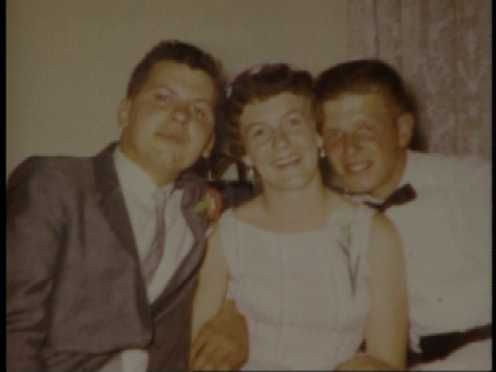
Marlynn Myers is a private individual. Her name comes up almost entirely because of one thing: she was the first wife of John Wayne Gacy, one of the most notorious criminals in American history. She is not a public figure in her own right, and most of what is documented about her connects directly to that marriage.
This article covers what is reliably known — who Marlynn Myers was, how she met Gacy, the family they built together, and why their marriage ended. It also addresses what the public record does and does not show about her life after 1969.
Who Marlynn Myers Was?
Marlynn Myers was not a celebrity or public figure. She lived a private life, and most of what surfaces about her today exists only because of her documented connection to Gacy.
Genealogy records, including a profile on FamilySearch, identify her full name as Marlynn Lee Myers and suggest she was born in 1944. Those records also list her parents as Fred W. Myers and Wilma Louise Hudson Myers. It is worth being clear that this information comes from genealogy sources, not independently verified official records. It should be treated as a reasonable starting point, not established biographical fact.
What is more firmly supported is her family’s connection to the Kentucky Fried Chicken franchise business. Her father, Fred Myers, owned several KFC locations in Waterloo, Iowa. That detail is confirmed by multiple credible news sources and is relevant because it shaped where Marlynn and Gacy eventually settled.
How She Met John Wayne Gacy?
The meeting between Marlynn Myers and John Wayne Gacy was ordinary by every available account. The two worked together at a Nunn-Bush shoe store in Springfield, Illinois. There was nothing unusual about how they came to know each other — they were simply coworkers at a retail job.
The couple married in 1964. After the wedding, they relocated to Waterloo, Iowa, where Myers’ father had acquired his KFC franchises. Gacy stepped into a management role there, running the restaurants for his father-in-law. That move gave Gacy a stable, visible role in the local business community — a respectable image that would later stand in sharp contrast to what investigators would uncover years afterward.
The New York Times, People, and A&E have all reported on this period of Gacy’s life. The picture that emerges is one of a young married couple starting out in a mid-sized American city, with family ties providing economic stability.
Their Marriage, Children, and Life in Waterloo
During their years in Waterloo, Marlynn and Gacy built what appeared to be a conventional family life. To neighbors and people in the community, they seemed like a normal couple building a future together.
They had two children. Their son, Michael, was born in February 1966. Their daughter, Christine, followed in March 1967. These details are consistent across several credible sources, including People, A&E, and Newsweek.
Gacy’s role managing his father-in-law’s restaurants gave the family a solid footing. He was active and visible in the community. Nothing in Marlynn’s documented experience during this period suggests she had any reason to suspect criminal behavior. Gacy kept his conduct hidden, and that concealment would not become publicly known until much later.
The Divorce and What Triggered It
The marriage ended because of a criminal conviction — but it is important to be precise about which one. Gacy’s murders of at least 33 young men and boys, the crimes that made him infamous, took place in the 1970s. The divorce came years before any of that.
In 1968, Gacy was convicted of sexually assaulting a teenage boy in Waterloo, Iowa. Marlynn Myers filed for divorce the same day Gacy was sentenced on that charge — in December 1968. The divorce was finalized on September 18, 1969, according to reporting by both People and Newsweek.
Myers was awarded sole custody of both children, Michael and Christine. Her decision to file for divorce the day of sentencing is telling. She did not wait. The 1968 conviction was enough to end the marriage entirely.
This timeline matters because it is sometimes confused in popular coverage. The divorce was a response to Gacy’s 1968 sexual assault conviction, not to the serial killings that were uncovered about a decade later.
What Myers Knew, and What the Record Does Not Show?
This is probably the question readers most want answered: did Marlynn Myers know what Gacy was capable of?
Based on what is publicly documented, the answer is no — and there is no reliable reporting that suggests otherwise. Gacy’s murders occurred during the 1970s, after the couple had divorced and gone their separate ways. The crimes that shocked the country happened well after Marlynn Myers had already left the marriage.
Available sources also indicate that Gacy had little or no contact with Myers or their children after the separation. Multiple outlets note this point, though the specific wording varies slightly across accounts. What is consistent is that the family did not remain in contact with Gacy after the divorce.
Being married to someone does not mean knowing what that person is hiding. Gacy maintained a public image — a businessman, a community participant, eventually known for performing as “Pogo the Clown” at charity events — that concealed his crimes from nearly everyone around him. There is no documented evidence that Myers had any knowledge of, or connection to, his later criminal activity.
She should not be described as an accomplice. She should not be framed as someone who enabled his crimes. The public record does not support those characterizations.
Life After the Divorce
What happened to Marlynn Myers after September 1969 is largely unknown to the public. She chose a private life, and the available reporting respects that boundary — or simply does not have access to detailed information about her later years.
Some genealogy records suggest possible life dates, but as noted earlier, that kind of user-submitted data should not be treated as confirmed fact without independent verification. Biographical websites that claim specifics about her later life, remarriage, or death often cite each other rather than primary sources, which makes them unreliable for publication purposes.
What can be said with confidence is that Myers raised her two children after the divorce, maintained custody, and stepped away from any public association with Gacy’s story. Given the circumstances, that is an understandable choice.
For readers interested in how public figures and their families navigate life connected to major news stories, World Business Voice covers a range of profiles and background features that look at the people behind well-known events.
Why Her Story Still Comes Up?
Gacy was executed in 1994, but public interest in his case has not faded. Documentaries, true crime series, and anniversary coverage regularly revisit his story. When they do, Marlynn Myers’ name appears as part of the factual record — the first wife, the mother of his children, the woman who left when Gacy was convicted in 1968.
Her story is a reminder that the people connected to someone who commits serious crimes are not necessarily complicit in those crimes. Myers met a man at work, married him, had two children, and left when she learned he had committed a serious offense. She could not have known what he would later do. No available evidence suggests she did.
Marlynn Myers remains a private person who happened to be connected, through marriage and circumstance, to one of the most disturbing criminal cases in American history. That connection is documented and factual. What lies beyond it — her inner life, her later years, her own perspective — belongs to her, and it has stayed that way.
Also Read: