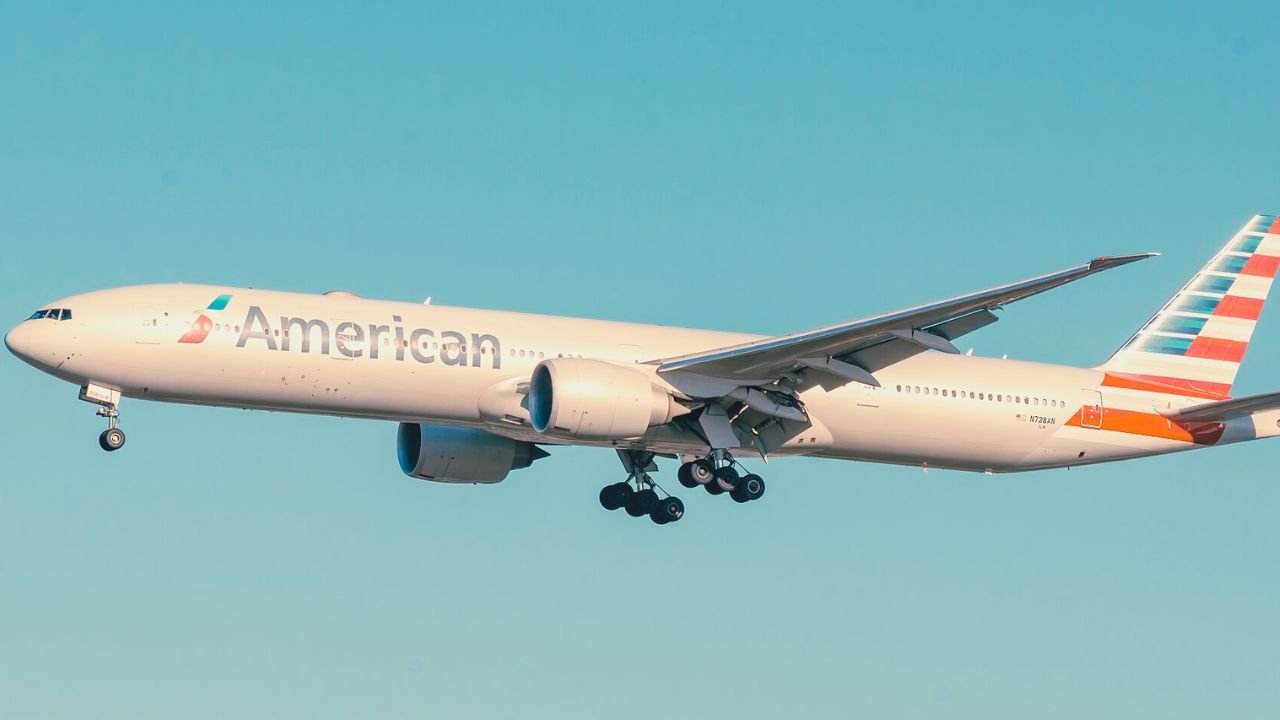
Headlines about earnings cuts, rising fuel costs, and falling stock prices have pushed a lot of people to ask the same question: is American Airlines on the verge of collapse?
It is a fair question, especially if you have flights booked, AAdvantage miles sitting in your account, or shares of AAL in your portfolio. This article walks through what the actual financial data shows — not the headlines, but the numbers.
The Short Answer, Based on Current Evidence
No. There is no credible evidence right now that American Airlines is about to shut down. The company has not filed for bankruptcy, has not received a going-concern warning from auditors, and is not in liquidation proceedings.
In fact, American posted its highest quarterly revenue in company history in Q2 2026, at $16.7 billion. The full year 2025 brought in a record $54.6 billion in revenue, with a positive GAAP net income of $111 million.
Companies on the verge of collapse do not post record revenue, provide forward earnings guidance to investors, or project more than $2 billion in free cash flow for the year ahead. American is doing all three.
That does not mean everything is smooth. The airline carries significant debt, its profit margins are thin, and fuel costs have created real pressure on its bottom line. But there is a meaningful difference between a company facing financial challenges and a company going out of business.
American Airlines’ Current Financial Performance
The most important thing to understand about American’s finances is this: high revenue and thin profits can exist at the same time. In the airline industry, that is not unusual — it is the norm.
Think of a large retailer that moves billions of dollars in merchandise each year but earns only a modest profit after paying rent, wages, logistics, and suppliers. A tight margin does not mean the business is failing. It means the business operates in a low-margin industry with high fixed costs.
American’s 2026 numbers reflect exactly that dynamic:
- Q1 2026: Record first-quarter revenue of $13.9 billion, but a GAAP net loss of $0.58 per diluted share. Seasonal patterns and cost pressures drove the loss.
- Q2 2026: The highest quarterly revenue in company history at $16.7 billion, up 16.3% year-over-year, with a GAAP net income of $71 million.
- Full-year 2025: Record revenue of $54.6 billion, adjusted net income of $237 million.
A net loss in Q1 followed by a profitable Q2 is not a sign of collapse. It reflects how airlines actually operate — demand is lower in winter, costs are relatively fixed, and margins improve as travel volumes pick up in spring and summer.
The broader picture shows a company generating real cash from operations, not one that is running out of runway.
What the 2026 Earnings Forecast Cut Actually Means
This is where a lot of the confusion comes from. Earlier in 2026, American projected adjusted earnings of $1.70 to $2.70 per share — above Wall Street’s average forecast at the time. That was based on strong premium cabin demand and a positive start to the year.
Then jet fuel costs surged. As a result, American revised that forecast to a range of a loss of up to $0.40 per share to a profit of $1.10 per share. That is a notable shift, and it is reasonable for investors to pay attention to it.
But it is not a sign that the company cannot pay its bills.
Consider a bakery with a full line of customers every morning. If the cost of flour and energy doubles overnight, the bakery’s profit shrinks — even though demand is unchanged. The business is not failing. Its cost structure has tightened. That is essentially what happened to American when fuel prices moved sharply higher.
A downward guidance revision is a standard disclosure practice. Companies are required to update investors when material changes affect their financial outlook. It is a sign of transparency, not distress.
Importantly, American still projects more than $2 billion in free cash flow for 2026. That figure, filed with the SEC, reflects management’s expectation that the company will continue operating and generating cash — not struggling to keep the lights on.
The Debt Load — a Real Risk, but Not an Immediate Crisis
American’s debt is a legitimate concern, and it would be misleading to dismiss it. The airline accumulated a heavy debt burden during the pandemic period, and interest costs continue to weigh on net income.
However, the company has been actively working to reduce that debt. Analysts have described American as being in its strongest financial position in over a decade, which is worth noting even though its margins still lag behind Delta and United.
The path forward looks manageable, though not without risk. Analyst projections suggest American could reach approximately $66.8 billion in revenue and $2.1 billion in earnings by 2029, assuming continued demand growth and successful debt reduction. These are forecasts, not guarantees, but they reflect a general expectation among analysts that the company survives and deleverages over time — not that it disappears.
The key metrics to watch are not quarterly EPS swings but rather the company’s ability to service debt, maintain liquidity, and generate positive free cash flow. On those measures, American is currently holding its ground.
How American Compares to Its Peers
It is worth acknowledging that American is not in the same financial position as Delta or United. Those carriers have stronger margins, lower debt burdens, and arguably more financial flexibility.
Analyst ratings on AAL are mixed — some analysts rate it a Buy, while many maintain a Hold or Neutral view, citing the margin gap relative to competitors. That divide reflects uncertainty about the pace of improvement, not a consensus view that the airline is failing.
American is at what some analysts have called a “pivotal crossroads.” It has the revenue base and the demand to support long-term viability, but it needs to keep improving margins and reducing debt to close the gap with peers. That is an operational challenge, not an existential crisis.
What About Tickets, Miles, and Travel Plans?
For travelers with flights booked or miles in their AAdvantage accounts, the practical answer is straightforward: as of the most recent filings, American is operating its full network, reporting record revenue, and investing in its loyalty program.
AAdvantage is widely considered one of American’s most valuable assets. Airlines have strong incentives to protect their loyalty programs because those programs generate significant revenue through co-branded credit card partnerships and other agreements.
There is no official indication that tickets or miles are currently at risk. That said, standard travel precautions remain sensible regardless of which airline you fly:
- Consider travel insurance for expensive or non-refundable trips.
- Book with a credit card that offers purchase protection.
- Use your miles periodically rather than letting large balances accumulate indefinitely.
These are prudent habits for any airline, not specifically a response to American’s situation.
Why These Rumors Keep Circulating
Part of the problem is how financial news gets interpreted — and amplified — online. A one-quarter earnings miss, a stock price drop, or a guidance revision can generate headlines that sound alarming even when the underlying business is stable.
American has also filed for Chapter 11 bankruptcy in the past, which adds to the perception of fragility. But it is worth understanding what that actually means. Chapter 11 is a reorganization process, not a shutdown. Airlines that file under Chapter 11 typically continue flying while they renegotiate debt and restructure contracts. Passengers usually keep their tickets and miles throughout the process.
For more context on how to read airline financial news accurately, resources like World Business Voice offer grounded analysis without the sensationalism.
The difference between bankruptcy reorganization and going out of business is significant. Liquidation — where a company actually stops operating and sells off its assets — is a far more extreme outcome and requires a completely different set of circumstances.
American is not in bankruptcy right now. And there is no current evidence pointing toward either scenario in the near term.
Key Risks Worth Monitoring
None of this means American is without risk. Informed travelers and investors should keep an eye on the following:
- Fuel costs: Jet fuel remains American’s largest variable expense, and price spikes can quickly compress margins.
- Debt servicing: High interest costs continue to reduce net income; the pace of debt reduction matters.
- Labor negotiations: Union contracts and staffing costs are ongoing considerations for all major carriers.
- Demand shocks: A recession, geopolitical disruption, or health crisis could undermine the current record demand environment quickly.
- Competitive pressure: Delta and United are executing with stronger margins, which limits American’s pricing power in some markets.
These are real factors. But risks are not the same as certainty of failure. Every major business operates with risk.
The Bottom Line
American Airlines is not going out of business based on any current evidence. It is generating record revenue, projecting positive free cash flow, and actively reducing debt — none of which are consistent with a company in imminent collapse.
Also Read:
- Is Carquest Going Out Of Business?
- Is Church’s Chicken Going Out of Business?
- Is Triton Boats Going Out of Business?