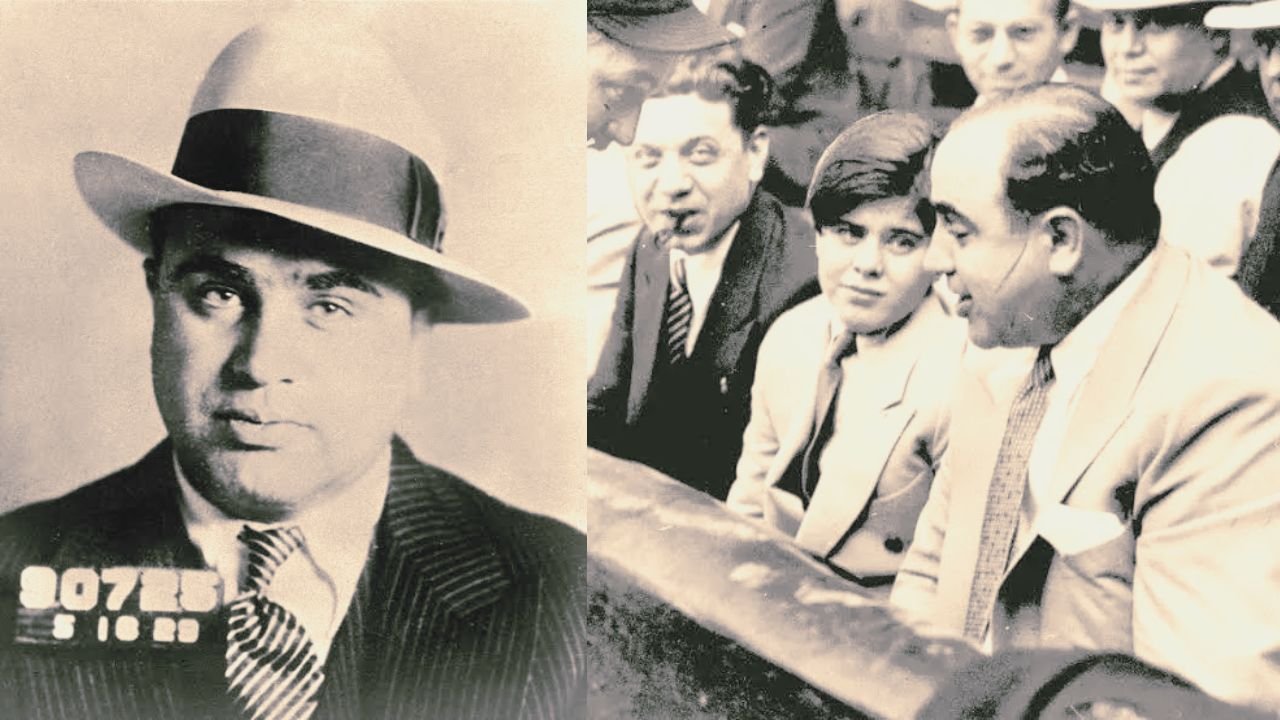
Al Capone is one of the most documented figures in American crime history. Books, films, and documentaries have covered his rise and fall in remarkable detail. Yet his only known son lived a life that looked almost nothing like his father’s — quiet, private, and largely out of the public eye.
This article looks at who Albert Francis Capone was, where he came from, the family he built, and why genealogy records list him under several different names.
Al Capone’s Only Known Child
Albert Francis Capone — widely known by the nickname “Sonny” — was the only known child of Al Capone and Mae Josephine Coughlin. He was born on December 4, 1918, in New York City.
His parents married on December 30, 1918, just weeks after his birth. That timeline is worth noting because it places the marriage shortly after Albert arrived, which was not unusual for the era but does give useful context to how the family formed.
Al Capone himself came from an Italian immigrant family. His parents were Gabriele and Teresina Capone, who had come to the United States from Italy. Mae Coughlin, by contrast, came from an Irish-American background. The family line runs simply: Gabriele and Teresina Capone → Al Capone and Mae Coughlin → Albert Francis Capone.
Genealogy records at FamilySearch list his full name as Alphonse Albert Francis Capone Jr. If you come across that name in a family tree or record search, it refers to the same person commonly called Albert or Sonny.
Childhood During His Father’s Rise and Fall
Albert’s early years overlapped directly with one of the most turbulent periods in American crime history. His father rose to become Chicago’s most notorious organized-crime figure during the Prohibition era, was convicted of federal tax evasion in 1931, and spent years in prison before his health deteriorated significantly.
Growing up with the Capone name was not a neutral experience. The family carried enormous public attention, even when they weren’t seeking it.
Biographical accounts report that Albert lost most of the hearing in his left ear as a child. This detail appears in multiple sources, including secondary outlets that have covered his life. Some popular sources also repeat a claim linking his health to his father’s medical history, but that particular claim lacks strong primary or medical sourcing, so it should not be treated as an established fact.
What is clear is that Albert did not follow his father into a public criminal career. By all available accounts, he moved in a very different direction as he grew older.
Marriage, Family, and Life as a Private Person
In 1941, Albert married his high-school sweetheart, Diane Ruth Casey. FamilySearch records support this marriage date and confirm that the couple had four daughters together.
Later coverage, including a piece in People magazine focused on Al Capone’s grandchildren, identifies the daughters as Veronica, Teresa, Barbara, and Patricia. Patricia is also referenced in some sources as using the name Diane.
Every account available paints a consistent picture of Albert as someone who kept a low profile. He was a husband and a father. He was not a public figure, and the documented record does not support describing him as a gangster or a crime figure in any way.
It would be easy to assume that being Al Capone’s son meant living in constant chaos or danger. But the available information suggests Albert built a family life that was, by most measures, ordinary. That contrast with his father’s story is genuinely striking — and it appears to have been intentional.
The Name Change to Albert Brown
One of the more commonly repeated details about Albert’s later life is that he adopted the surname Brown. Some accounts place the reported name change in 1966.
This detail appears across several secondary sources, including coverage from All That’s Interesting, but it has not been confirmed through a primary legal or vital record in publicly available research. So while it is a detail worth mentioning, it should be understood as reported rather than officially documented.
The name Albert Francis Brown therefore appears in later records and coverage as a likely reference to the same person. If you are doing genealogy research on the Capone family and searching only under the Capone surname, you could easily miss records filed under Brown.
This kind of name variation is actually common across the wider Capone family. Members used nicknames, alternate first names, and in some cases different surnames altogether. Al Capone’s brother James Vincenzo Capone, for example, later used the name Richard Hart. For anyone tracing this family in records, it is worth knowing that a single person may appear under multiple names depending on the source and the time period.
For readers interested in American family history and how public figures’ relatives navigated fame and notoriety, resources like World Business Voice cover similar stories of people who lived in the shadow of larger public legacies.
Why Genealogy Records Can Be Confusing?
If you search for Albert Francis Capone in genealogy databases, you may find him listed under several different names. FamilySearch uses “Alphonse Albert Francis Capone Jr.” Other sources use “Albert Francis Capone,” “Sonny Capone,” or “Albert Francis Brown.”
These are all likely references to the same person. The variation exists because family members, journalists, and record keepers each used different names at different times.
One important caution: Al Capone also had a brother named Albert. So not every “Albert Capone” entry in a genealogy database refers to Al Capone’s son. It is worth cross-referencing birth dates, parents’ names, and locations before drawing conclusions from any single record.
For exact vital statistics — dates, places, legal names — obituaries, vital records, and institutional biographies are more reliable than genealogy databases or celebrity websites alone. Genealogy tools are useful for mapping relationships, but they should be a starting point rather than a final authority.
Albert’s Later Life and Legacy
Albert Francis Capone is reported to have died in 2004, at around age 85. Family and memorial sources support this date, though a formal obituary or official vital record would be the strongest confirmation.
His four daughters have occasionally been referenced in media coverage about the Capone family’s modern legacy. A People magazine feature on Al Capone’s grandchildren touched on this, though the focus was naturally on the broader family rather than Albert specifically.
Albert’s significance, in the end, comes from two things. First, he was Al Capone’s only known child — a direct link in one of the most famous family lines in American crime history. Second, and perhaps more interestingly, he chose to live nothing like the man his father was.
He married, raised four daughters, and kept a private life. He reportedly changed his name, likely to put distance between himself and one of the most recognizable surnames in American history. That decision, whether driven by necessity or personal preference, shaped how his story is told today.
Final Thoughts
Albert Francis Capone — also known as Sonny Capone, and later possibly Albert Francis Brown — offers a quieter counterpoint to his father’s enormous public story. Where Al Capone was everywhere, Albert was nowhere in particular, which may have been exactly the point.
What the records show is a man who was born into extraordinary circumstances and chose, as far as we can tell, to step away from them. He built a family, stayed out of trouble, and lived long enough to see his own grandchildren become the subject of occasional media curiosity about the Capone name.
For a name so associated with crime and notoriety, Albert Francis Capone’s own story is remarkably straightforward. And in its own way, that makes it worth knowing.