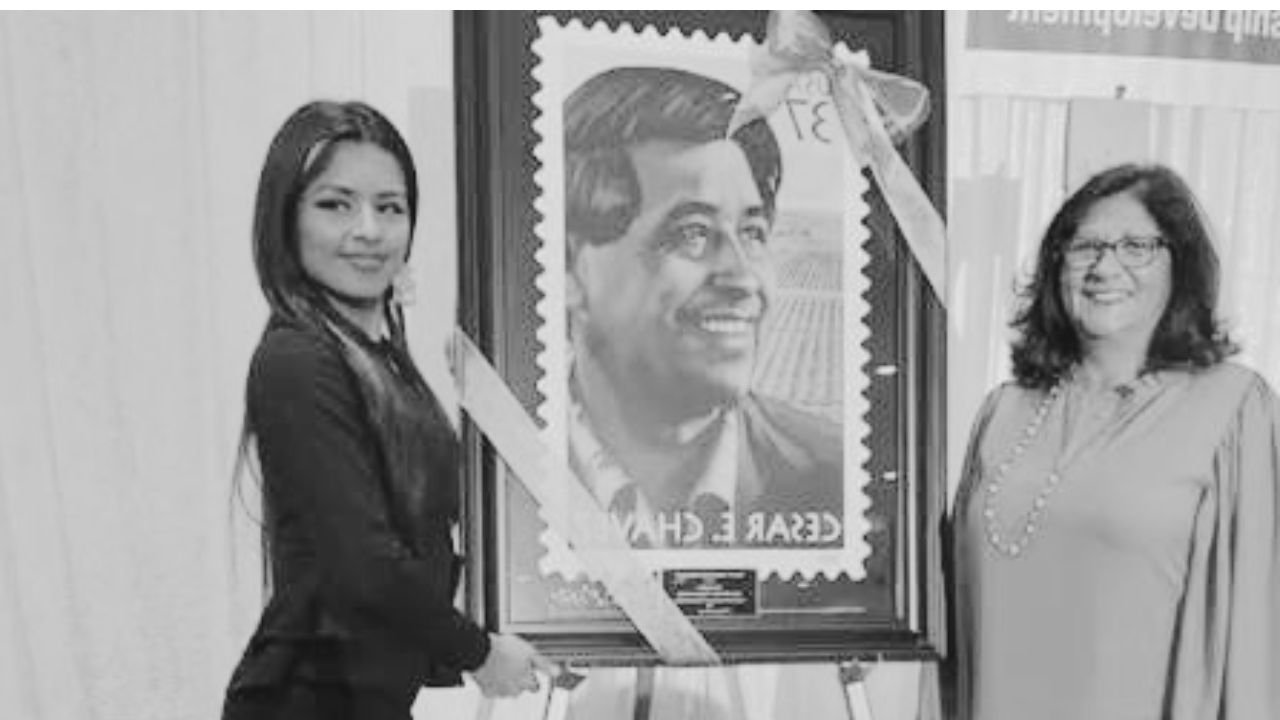
If you search for Elizabeth Chavez Villarino, you will likely land on a genealogy database or a family tree listing first. The results are thin. There is no Wikipedia page, no celebrity profile, and no major media biography waiting for you. What you find instead are short references — a name in a list of Cesar Chavez‘s children, a line in an IMDB trivia section, or a brief mention in an archived news article.
That is actually not unusual for someone in her position. Elizabeth is not a public figure in the traditional sense. She is one of eight children born to one of the most important labor leaders in American history, and she has spent much of her adult life doing quiet, essential work behind the scenes of the farm worker movement her father built.
This article answers the questions that the genealogy pages leave open — who she is, where the surname Villarino comes from, what she actually did inside the United Farm Workers organization, and how she continues to be part of her father’s public legacy today.
Who Is Elizabeth Chavez Villarino
Elizabeth Chavez Villarino is one of eight children born to labor leader Cesar Chavez and his wife Helen Fabela Chavez. Multiple independent sources confirm her place in the family, including IMDB biographical data, educational resources, and genealogy platforms like MyHeritage.
Her full siblings are Fernando, Paul, Sylvia, Linda, Anna, Eloise, and Anthony Chavez. Each of them grew up inside the farm worker movement, attending organizing meetings, volunteer events, and strikes alongside their parents from an early age.
Elizabeth is not a media celebrity. She does not appear regularly in interviews, press events, or public campaigns under her own name. Most references to her exist in organizational records, news articles about the Chavez family’s nonprofits, and academic oral history collections. Her identity as a public-facing individual is tied almost entirely to her family connection and her professional work in farm worker organizations.
An oral history interview with “Liz Chávez Villarino, daughter of César Chávez” exists in the Ethnic Studies Oral History Collection at Cal Poly, though these materials are academic resources rather than widely circulated media profiles.
Cesar Chavez and Helen Fabela Chavez — Her Parents
To understand who Elizabeth is, you need to understand where she came from.
Cesar Chavez was born on March 31, 1927, in Yuma, Arizona. He became one of the most recognized labor and civil rights figures in U.S. history. Together with Dolores Huerta, he co-founded the National Farm Workers Association, which later became the United Farm Workers (UFW). The UFW fought for better wages, safer working conditions, and basic human dignity for agricultural laborers — many of them Latino immigrants working in harsh conditions across California and the Southwest.
Chavez received the Presidential Medal of Freedom and the Pacem in Terris Award. He is remembered for his use of nonviolent tactics, including strikes, boycotts, and hunger strikes, to draw national attention to farm worker conditions.
He married Helen Fabela Chavez in 1948. They stayed married until his death in 1993. Helen was a steady partner in the movement and raised their eight children alongside it. The family did not live separately from the cause — the farm worker struggle was part of daily life in the Chavez household.
That context matters when you look at Elizabeth’s career. She did not choose the farm worker movement from the outside. She was raised inside it.
Why Her Last Name Is Villarino
One of the most common questions people have when they find her name is simple: why “Villarino”?
Elizabeth Chavez married a man named David Villarino, which is where the second surname comes from. The compound name — Chavez Villarino — reflects a common practice in Latino naming traditions where a woman keeps her birth name alongside her married name. It also signals her continued public identification as a Chavez, which carries real meaning given her father’s legacy.
David Villarino was not an outsider to the movement. According to a 2006 Los Angeles Times report on Chavez-linked charities, David served as executive director of the Farmworker Institute for Education and Leadership Development, known as FIELD. He also held a board position at a related service center.
In other words, her marriage connected two people who were both professionally rooted in the same network of organizations tied to Cesar Chavez’s work. The Villarino name, then, is not a departure from the Chavez world — it is another branch of it.
Her Work With the UFW and Chavez-Linked Organizations
Beyond her family identity, the most substantive confirmed information about Elizabeth comes from her professional work in farm worker organizations.
She is often referred to as “Liz” in organizational contexts. According to the Los Angeles Times, she worked as the controller and comptroller for the United Farm Workers. She also served as treasurer for LUPE and the Cesar Chavez Foundation.
The same report noted that she learned accounting as a teenage volunteer and moved into formal financial management roles after high school. That detail says a lot. She did not enter these organizations as an executive with a business degree. She grew into the role from the ground up, starting as a young volunteer and eventually taking on responsibility for the finances of several interconnected nonprofits.
As a controller and treasurer, her work was operational. She managed budgets, handled accounting, and oversaw the financial health of organizations that depended on donations and grants to fund farm worker education, legal services, and community programs. Think of it as a chief financial officer role in a nonprofit environment — essential, detailed, and mostly invisible to the public.
A 2011 report noted that Liz Villarino had worked for years as controller for a farm worker service center while her husband David led an associated organization. The two of them were, in effect, an organizational unit embedded in the broader Chavez movement infrastructure.
The Broader Family Network
Elizabeth is one piece of a much larger picture. The Los Angeles Times reported that roughly a dozen of Cesar Chavez’s children and grandchildren held roles in entities connected to the farm worker movement, including unions, foundations, and service organizations.
Her brother Paul Chavez has been associated with the Cesar Chavez Foundation. Other siblings, including Sylvia Chavez Delgado, Eloise Chavez Carrillo, and Anthony Chavez, have also been named in organizational and commemorative contexts. The movement her father built did not fade after his death in 1993 — it was carried forward by his family, operating as a network of connected organizations with different functions but a shared purpose.
Elizabeth’s financial role inside that network was not glamorous, but it was important. Nonprofits that cannot manage their money do not survive. The fact that she handled the accounting for the UFW and multiple related organizations for years reflects a serious level of responsibility and trust.
Her Continued Connection to Her Father’s Legacy
Elizabeth has not stepped away from her father’s public memory. In 2022, the Cesar Chavez Foundation noted that five of Cesar Chavez’s eight children — Sylvia Delgado, Eloise Carrillo, Paul Chavez, Elizabeth Villarino, and Anthony Chavez — joined the Mexican president and other leaders at an annual historical commemoration honoring their father’s legacy.
That kind of participation is typical of how Elizabeth appears in public life. Not as a speaker or a headline figure, but as a family presence at events where her father’s work is remembered and honored.
For readers interested in the intersection of family legacy and labor history, resources like World Business Voice offer broader context on how organizations and individuals shape industries and communities over time.
Why There Is So Little Information About Her
If you came to this article frustrated by how little you found elsewhere, there is a straightforward reason for that.
Elizabeth Chavez Villarino works in financial management and internal operations. She does not give speeches at rallies, appear in documentaries, or run public campaigns in her own name. The roles she has held — controller, comptroller, treasurer — are by nature behind-the-scenes positions. They show up in organizational filings and newspaper investigations, not in profile features or interview segments.
She is also a private person. Unlike her father, who was a public figure by necessity and by choice, Elizabeth has built her professional life in the operational infrastructure of organizations rather than their public face.
That does not make her contribution minor. Organizations do not run on vision alone. They run on budgets, audits, and accurate financial records. For the United Farm Workers and the Cesar Chavez Foundation, having a reliable, knowledgeable person managing those finances for years was a quiet form of dedication to her father’s work.
A Summary of What We Know
Here is what is clearly confirmed about Elizabeth Chavez Villarino, based on sourced public records:
- She is one of eight children born to Cesar Chavez and Helen Fabela Chavez.
- Her siblings include Fernando, Paul, Sylvia, Linda, Anna, Eloise, and Anthony Chavez.
- She married David Villarino, which is the origin of the Villarino surname.
- David Villarino served as executive director of FIELD and held related board positions.
- Elizabeth worked as controller and comptroller for the United Farm Workers.
- She also served as treasurer for LUPE and the Cesar Chavez Foundation.
- She learned accounting as a teenage volunteer and built her career from within the movement.
- She continues to participate in public commemorations honoring her father’s legacy.
What we do not know in detail — her birth date, personal life, children, or private activities — has not been confirmed in reliable public sources, so this article does not speculate on those details.
Also Read: