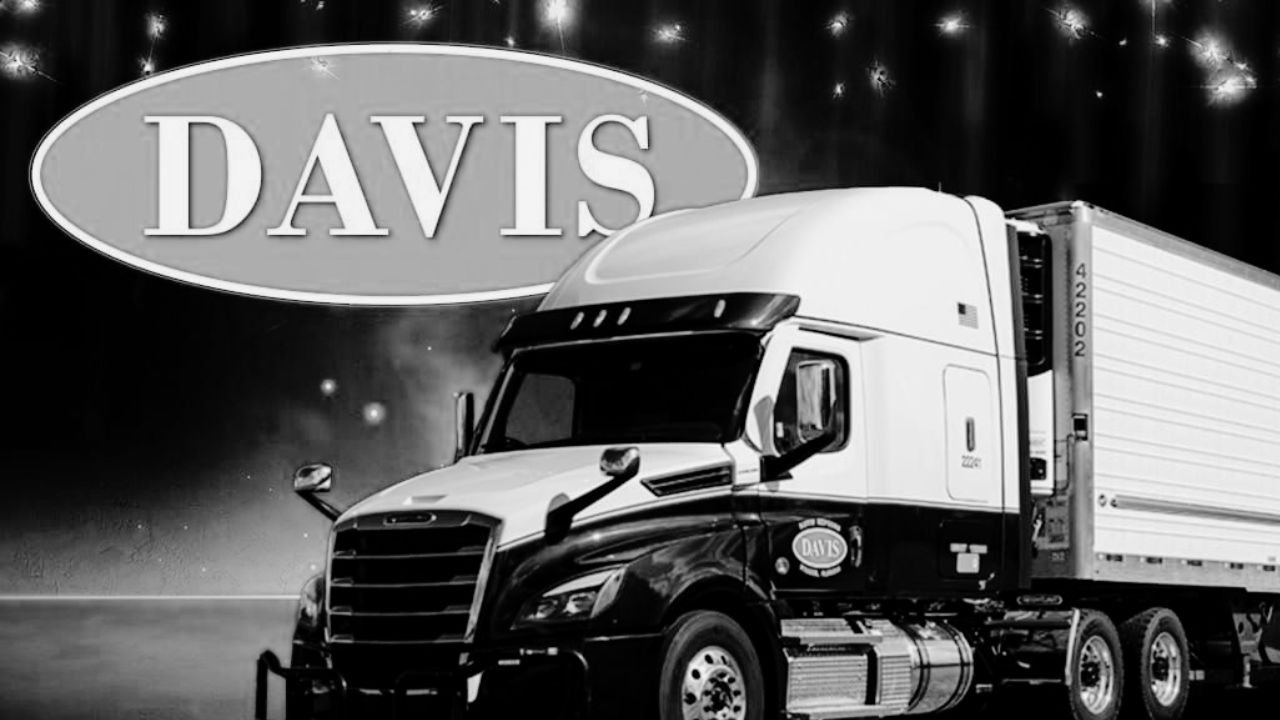
After 44 years in business, Davis Express Inc. is shutting down. The closure is not a rumor, and it is not a temporary pause. For a family-owned refrigerated carrier that quietly became one of Bradford County’s largest employers, this is the end of the road.
If you are a driver, a shipper, or just someone trying to confirm the news, here is everything you need to know — what happened, why it happened, and what it means for the people involved.
Yes, Davis Express Is Closing — Here Are the Key Details
Davis Express Inc., a refrigerated trucking company based in Starke, Florida, is going out of business in 2025. This is a permanent closure, not a restructuring or temporary suspension of operations.
Owner Jimmy Davis announced the shutdown on Facebook. According to reports from Truckers News and other industry sources, the last deliveries were made around April 23–30, 2025. The company filed a WARN notice with the state of Florida, which listed 163 affected employees. Paychecks will continue through June 15, 2025, giving the wind-down some structure.
One important clarification: this is Davis Express Inc. in Starke, Florida — a refrigerated freight carrier. There are other businesses with similar names in different states. This article is specifically about the Florida-based trucking company.
No bankruptcy has been reported. This appears to be a planned, orderly shutdown — not a sudden collapse.
What Davis Express Was and Why It Mattered Locally
Davis Express was founded around the early 1980s. It specialized in refrigerated freight, primarily serving food and grocery customers — the kind of work where reliability is not optional. A missed delivery in temperature-sensitive freight is not just an inconvenience; it can mean spoiled product and broken contracts.
The company ran a fleet of approximately 160 trucks and employed 163 people at the time of closure. For a small community like Starke, that is not a minor footprint. Davis Express was described as one of Bradford County’s largest employers, which puts its closure in a different category than a typical small-business shutdown.
When a company that size closes in a small town, the effects go beyond the 163 people on the payroll. Local businesses that serve those workers — gas stations, restaurants, service providers — feel the drop too.
The Reasons Behind the Closure: Costs, Rates, and a Difficult Market
Jimmy Davis was direct about the reasons. He stated that the company has not been profitable for several years. This was not a sudden crisis triggered by one bad quarter. It was a slow, sustained squeeze.
The cost pressures are familiar to anyone who follows the trucking industry. Fuel, insurance premiums, maintenance, and general operating costs have all climbed since at least 2023. At the same time, freight rates have stayed flat or declined — a combination that is difficult for any carrier to absorb long-term.
Here is a simple way to think about it: if your costs rise 15–20% over a few years but the rates shippers are willing to pay do not move, your margins disappear. If you are a large national carrier with thousands of trucks, you have more room to negotiate and absorb those hits. If you run 160 trucks as a family business, that room is much smaller.
Davis also pointed to the rise in potential lawsuits as a factor. This is a real and growing pressure in trucking. Nuclear verdicts — cases where juries award extremely large sums against trucking companies — have pushed insurance premiums higher across the industry. For smaller carriers, those premiums can become a significant fixed cost with no easy way to offset them. Larger fleets can spread that risk differently. A regional family carrier cannot.
This is not an isolated story. It fits a broader pattern that industry observers have been tracking for a couple of years — a freight recession where mid-sized family-owned carriers are closing at a higher rate than mega-carriers, who have the scale and capital to survive thinner margins.
Retirement With No Successor: The Other Half of the Story
Financial pressure alone does not always end a business. Sometimes, the missing piece is someone to keep it going. In Davis Express’s case, that piece was never there.
Jimmy Davis decided to retire. The next generation of the family has no interest in taking over the company. Without a willing successor — or a viable buyer — the realistic options narrow quickly, especially when the business has not been profitable for years.
Think of it like a family-owned restaurant where the founder is ready to exit, but the children have gone into other careers. Selling is hard when margins are thin and the business model requires constant operational management. Walking away becomes the practical choice.
That dynamic is more common in trucking than people realize. Family-owned carriers often depend heavily on the founder’s relationships, knowledge, and willingness to absorb the stress of the business. When that person steps back and no one steps forward, the company does not survive on momentum alone.
The combination of sustained losses and no succession plan made the outcome clear. It was not one problem — it was two compounding problems with no clean solution.
What This Means for Employees and Customers
For the 163 Employees
Workers will receive paychecks through mid-June 2025. That gives drivers and staff roughly one to two months to find new positions after operations ceased in late April. The good news, at least in relative terms, is that CDL drivers remain in demand in Florida and across the country. Refrigerated freight experience is a marketable skill.
Still, losing a job is disruptive regardless of the job market conditions. Workers who have been with Davis Express for years now have to rebuild routines, benefits, and seniority somewhere else.
For Shippers and Customers
Any food or grocery shipper that relied on Davis Express for refrigerated lanes now needs to find replacement capacity quickly. Refrigerated trucking is not as easy to replace as dry van freight — there are fewer carriers, and capacity constraints can be real during peak demand periods.
Shippers who had long-standing relationships with Davis Express should treat this as a prompt to re-bid those lanes and finalize contracts with alternative carriers as soon as possible. Waiting until a supply chain gap appears is not a smart approach.
Lessons for Other Family-Owned Carriers
Davis Express is one company, but its story reflects pressures that dozens of similar carriers face right now. There are a few practical takeaways worth considering.
- Succession planning cannot wait until retirement. If the next generation is not interested in the business, that is important information. Knowing it early creates options — finding a buyer, bringing in outside management, or planning a wind-down on your own terms rather than under financial duress.
- Years of thin or negative margins eventually force a decision. Davis Express reportedly ran at a loss for several years before closing. That is a long time to fund operations without a path back to profitability. Carriers facing similar margin pressure should be honest about whether the trend can realistically reverse.
- Insurance and legal risk are operational costs now, not just background concerns. The nuclear verdict problem in trucking is real. Premiums have risen significantly for smaller carriers. If your insurance costs have grown faster than your revenue, that is a structural issue worth addressing directly — whether through risk management, legal counsel, or reassessing the scale of operations.
For more practical business coverage on topics like these, World Business Voice covers the decisions and pressures that owners and managers actually face.
Final Thoughts
Davis Express ran for 44 years. That is not a small thing. Building a refrigerated carrier from the ground up, sustaining it through multiple freight cycles, and keeping 163 people employed in a small Florida community takes real work.
The closure is not a story about failure in the dramatic sense. It is a story about economics, timing, and the reality that even well-established businesses reach a point where the numbers no longer work — and there is no one ready to take the wheel.
For the trucking industry, it is one more data point in a difficult freight environment. For the people in Starke and Bradford County, it is the loss of a stable employer that was part of the community for more than four decades.
Also Read:
- Is American Airlines Going Out of Business?
- Is Old Navy Going Out of Business?
- Is Lumber Liquidators Going Out Of Business?