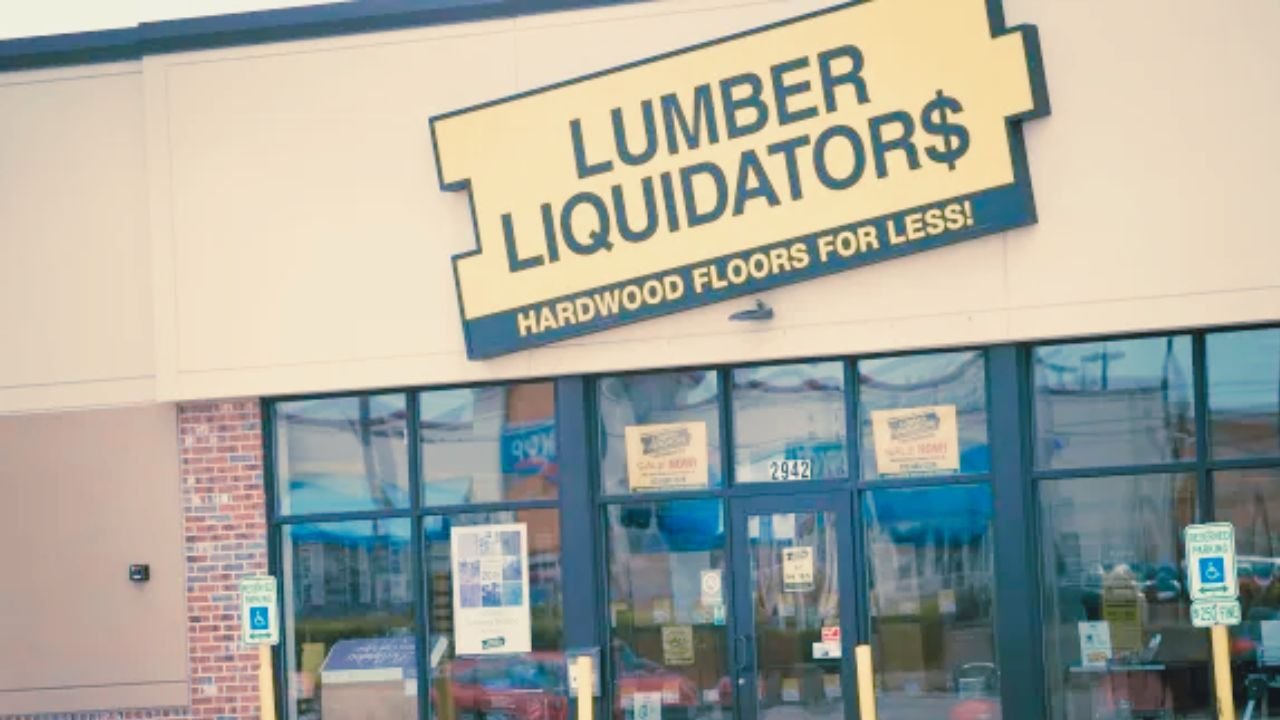
In late 2024, headlines declared that LL Flooring — formerly Lumber Liquidators — was shutting down all of its stores after 30 years in business. For customers mid-project, investors holding shares, and employees depending on their jobs, the news was alarming.
But the full story is more complicated than those headlines suggested. Here is a clear account of what actually happened — the bankruptcy, the store closures, who bought the company, and what exists today.
A Brief History of Lumber Liquidators and the LL Flooring Rebrand
Lumber Liquidators built its reputation as one of the largest hard-surface flooring retailers in the United States. The company sold hardwood, laminate, vinyl plank, bamboo, and related products at competitive prices.
In 2016, the company rebranded to LL Flooring as part of an effort to modernize its image and broaden its appeal beyond the “lumber” association. The name change was meant to signal a wider product focus.
After the 2024 acquisition — which we will cover shortly — the brand reverted back to Lumber Liquidators. So if you have seen both names in recent news, you are reading about the same company at different points in its history.
The 2015 Formaldehyde Scandal and Its Long-Term Damage
To understand the 2024 collapse, it helps to go back to 2015. That year, a 60 Minutes investigation alleged that certain Chinese-made laminate flooring sold by Lumber Liquidators contained formaldehyde levels above acceptable safety limits.
The fallout was significant. The company faced regulatory scrutiny, legal settlements, and substantial fines. Consumer trust declined sharply and never fully recovered.
It is important to be precise here: the investigation focused specifically on products sold before 2015. There is no current evidence that products sold after the resulting regulatory changes carried the same issues. Still, the reputational damage was lasting. The scandal made consumers cautious, and that caution showed up in the company’s sales figures for years afterward.
The 2015 episode should be understood as one contributing factor to the company’s long-term struggles — not the only one. Rising competition from big-box retailers, online flooring sellers, and broader economic pressures all played a role as well.
The 2024 Bankruptcy Filing and the Initial Plan to Close Everything
On August 11, 2024, LL Flooring Holdings Inc. filed for Chapter 11 bankruptcy protection. The company had been struggling with declining revenue, and initial efforts to find a buyer before the filing had failed.
At the time of the announcement, the chain operated 442 stores. Of those, 94 were already in the process of closing. With no buyer secured, the company announced it would liquidate the remaining locations as well — effectively ending the business entirely after three decades.
Liquidation sales at the remaining stores were set to begin on September 6, 2024, with a wind-down period of approximately 12 weeks. Around 2,000 employees faced job losses under that scenario.
The financial picture was grim. Net sales had dropped 21.7% to $188.5 million in 2024. The stock had fallen roughly 53.5% to about $0.60 per share as bankruptcy speculation intensified. It looked, by every measure, like the end.
How a Last-Minute Acquisition Changed the Outcome
Just as full closure appeared certain, a buyer emerged. Private equity firm F9 Investments, led by Lumber Liquidators founder Thomas (Tom) Sullivan, stepped in with an acquisition offer.
F9 agreed to acquire 219 stores, a Virginia distribution center, and the company’s intellectual property and other assets. The deal was reached on September 9, 2024, and a bankruptcy court approved it on September 16, 2024.
This changed the outcome significantly. Instead of a complete shutdown, roughly half the store network continued operating. The remaining 211 stores — including the 94 already in closure — were permanently shut down.
By October 2024, the surviving locations had been rebranded back to Lumber Liquidators. The founder’s return through F9 was a notable development. Sullivan, who originally built the company, came back to salvage what remained of it.
So Is Lumber Liquidators Actually Going Out of Business?
The honest answer is: partially. LL Flooring as a corporate entity entered bankruptcy and roughly half its stores closed permanently. But a significant portion of locations were acquired and continue to operate under the Lumber Liquidators name.
The “going out of business” headlines were accurate at the time they were written — a total shutdown was the plan when no buyer existed. But the situation changed before that plan was fully executed.
Think of it this way: the chain is smaller, under new private ownership, and operating under its original name. It is not gone, but it is not what it was either.
What This Means for Customers
If you are a customer, the practical impact depends entirely on which store served you.
- If your local store closed: You may be among the customers whose nearest location is one of the 211 that shut permanently. Pending orders, warranties, and returns at closed stores are more complicated to resolve. Checking the company’s official communications directly is the most reliable step.
- If your local store stayed open: It now operates as Lumber Liquidators under F9 ownership. The reorganized business may still honor certain warranties, though it is worth confirming directly with the store given the change in ownership.
- Gift cards and pending orders: Bankruptcy can alter a company’s obligations to customers. The validity of gift cards and prior purchase agreements may depend on how the reorganization was structured. Treat these as time-sensitive and verify with the company directly.
A useful example: a homeowner who bought engineered hardwood in mid-2024 might find their local store open and rebranded as Lumber Liquidators — or might arrive to find it permanently closed with a notice on the door. The outcome varied by location.
What This Means for Investors
For investors, the picture is straightforward and unfavorable. Chapter 11 bankruptcy reorganizes a company’s debts under court supervision, but shareholders typically see little to no recovery in a sale process like this one.
With the stock dropping to roughly $0.60 per share amid bankruptcy speculation, and the company ultimately selling assets to F9 rather than restructuring as a public company, equity holders bore significant losses. Creditors may recover some value depending on the distribution of sale proceeds, but the details would be governed by the bankruptcy court process.
The F9 acquisition essentially means the business continues in a private form, not as a publicly traded entity. There is no path back to public markets from this transaction as reported.
Broader Business Lessons From the LL Flooring Story
The Lumber Liquidators story is a useful case study for anyone following the business world closely. A few clear lessons stand out.
Reputational damage compounds over time. The 2015 formaldehyde investigation did not immediately kill the company, but it created a persistent drag on consumer trust. A decade later, that damaged reputation made it harder to compete and nearly impossible to attract a buyer in a crisis.
Supply chain oversight matters. The quality control failures that led to the 2015 scandal originated in overseas manufacturing. For any retailer relying on global sourcing, that is a material risk — one that can produce legal liability, regulatory fines, and long-term brand erosion.
Founders sometimes come back. Tom Sullivan’s return through F9 Investments is a reminder that in distressed retail situations, original founders or insiders sometimes have both the motivation and the knowledge to salvage parts of a failing business when outside buyers walk away.
For further analysis of business developments like this one, World Business Voice covers corporate stories, market trends, and practical business insights.
The Road Ahead for Lumber Liquidators
Under F9 and Tom Sullivan, Lumber Liquidators enters a new chapter with a smaller footprint, private ownership, and the weight of its recent history.
Operating roughly 219 stores instead of 442 means lower overhead but also reduced market presence. Whether the brand can rebuild consumer trust — particularly among buyers who remember the 2015 scandal or the 2024 bankruptcy headlines — remains an open question.
Competition in the flooring retail space has not softened. Big-box stores and online retailers continue to draw customers who might once have chosen a specialty flooring store. A leaner operation could be more sustainable, or it could simply be a smaller version of the same underlying challenges.
What is clear is that Lumber Liquidators still exists. It is not the same company it was five or ten years ago, but it has not disappeared entirely. Whether the reorganized business can find stable footing is something the market will answer over the next few years.
Final Takeaway
The short version: LL Flooring filed for bankruptcy in August 2024 and initially planned to close all 442 stores. A last-minute acquisition by F9 Investments saved roughly 219 locations, which now operate as Lumber Liquidators under founder Tom Sullivan’s leadership. Around 211 stores closed permanently.
It is not a total shutdown. But it is not business as usual either. If you are a customer, investor, or simply someone following this story, the situation has more nuance than most early headlines suggested — and that nuance matters for the decisions you make going forward.
Also Read:
- Is Triton Boats Going Out of Business?
- Is American Airlines Going Out of Business?
- Is Old Navy Going Out of Business?